My teaching philosophy
My philosophy as an instructor is to personalize and humanize science so students can learn how to make decisions in their everyday lives more effectively. This requires teaching methods that improve students’ capacity to think critically, apply theory to their lives, and successfully communicate what they learn.
I see great value in experiential and active learning that integrates lectures, discussions, and student-centered approaches. My teaching promotes transparent and clear learning objectives that emphasize teamwork (through group discussions and projects), synthesis (through connecting course concepts to problems in the world), and metacognition and evaluation (through students providing feedback for how they felt they learned the material).
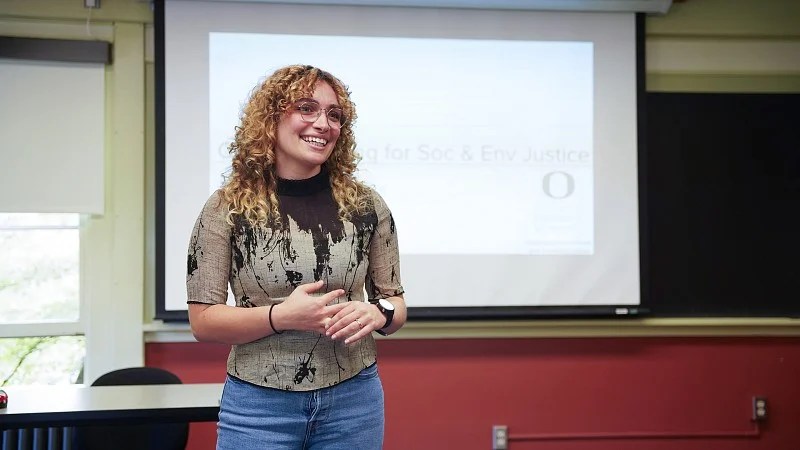
Communicating for Social and Environmental Justice
This class is designed to introduce students to environmental justice and social change communications. Students will spend time understanding environmental justice’s theory, practice, how it’s been communicated, and strategies for achieving a more justice-oriented world through improved and accessible communications. Students will delve into their own relationship to interconnected issues of justice, and develop various environmental justice communications. This course is for students who are interested in incorporating environmental and social change into their future careers as practitioners, communication professionals, and/or researchers.
Curiosity for Strategists
This class aims to foster a new appreciation of curiosity, which can improve creativity, problem-solving, and open-mindedness in students’ personal and professional lives. The course reviews the cognitive, social, and cultural approaches to building curiosity in your (professional) life. Assignments include readings, activities, and team projects dedicated to looking at the world differently and dedicated to building critical and conceptual solutions.
The Science of Science Communication
This class explores the theoretical foundations of the discipline of science communication. Students will spend their time in this course digging into scientific literature using the lens of a communicator, exploring the different models of science communication, and evaluating when and why those models work. Students will also learn about evaluating science communication activities to understand methods for assessing what works in science communication. A fundamental understanding of science communication theory and practice is essential for students who want to incorporate science communication strategies in their work.
Green Brand Strategy
This class delves into how advertising and consumerism have harmed sustainability endeavors and how (or if) the industry can aid efforts toward a more sustainable world. Students spend the term evaluating “green” brands, identifying greenwashing tactics, and crafting communications and campaigns that can hopefully lead to a cultural shift toward environmental change. This course helps students discover ways to align their professional goals with their values and ethics.
 Alex Segrè Cohen